
The suspension of a police officer accused of verbally abusing Adivasi students in Madhya Pradesh raises wider questions about cultural dignity, democratic protest, and the treatment of Indigenous communities.
Bhopal, India | 16 October 2026
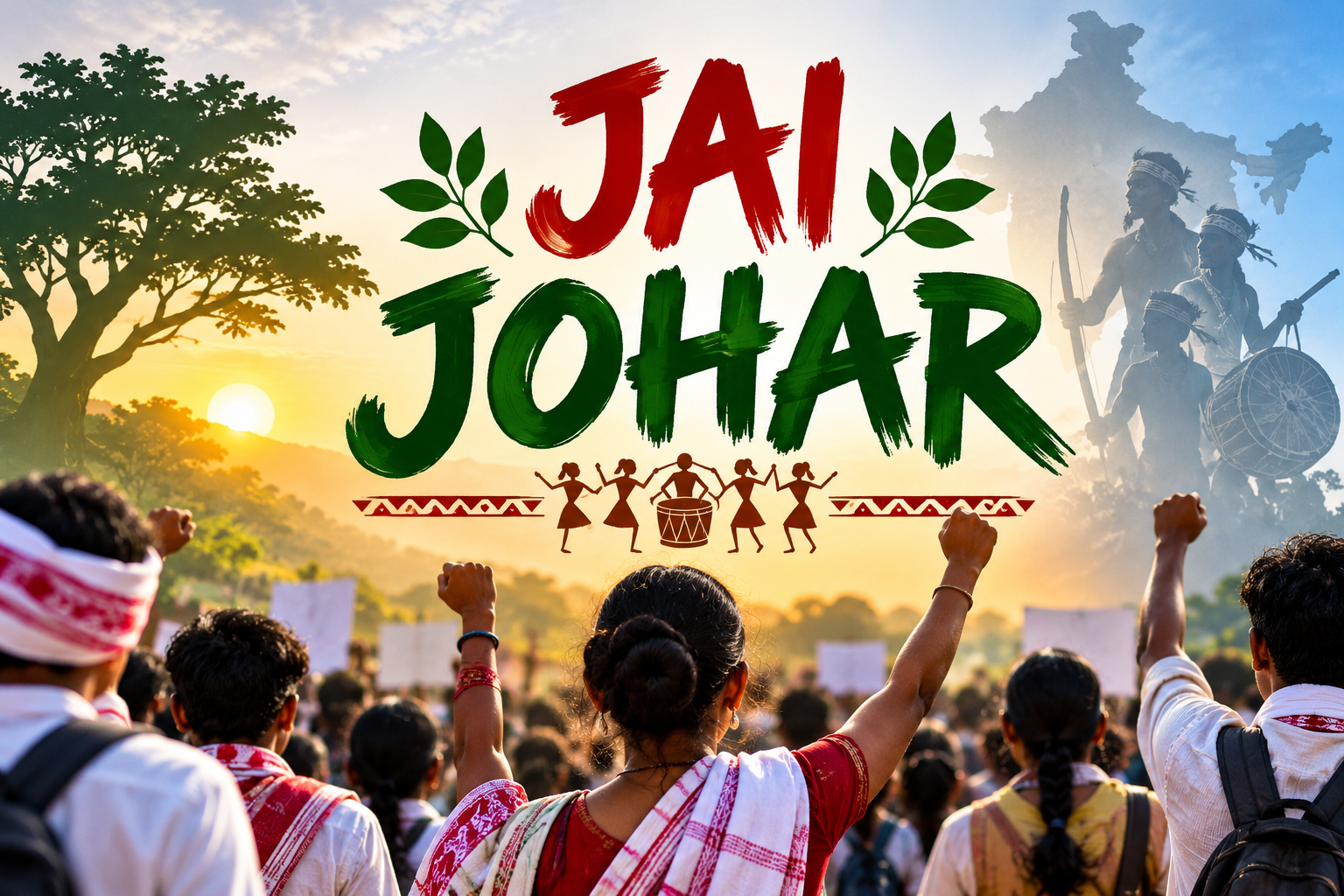
A traditional greeting expressing respect, solidarity, and cultural identity has become the centre of a controversy in the Indian state of Madhya Pradesh. A police officer was suspended after a video circulated on social media allegedly showing him verbally abusing Indigenous (Adivasi) students who were chanting “Jai Johar” during a protest in Bhopal.
The incident has triggered criticism from Indigenous organisations and political leaders, raising questions that extend beyond the conduct of an individual police officer: How freely can Indigenous communities express their cultural identity in public spaces? And how effectively do state institutions protect their right to peaceful protest?
According to reports published by The Times of India and India Today, Inspector Ratan Singh Parihar, the officer in charge of Misrod police station, was suspended on October 14 following the circulation of the video. Bhopal Police Commissioner Sanjay Kumar also ordered a departmental inquiry.
A protest over education turns into a cultural controversy
The confrontation occurred during a demonstration organised by students and youth associated with the Gondwana Gantantra Party’s student wing.
The protesters were raising concerns about difficulties faced by Indigenous students, including allegedly excessive fees charged by private educational institutions, delays and inadequacies in scholarship assistance, and insufficient facilities in tribal hostels.
As reported by The Indian Express, the demonstration took place on October 13, 2026. The students were attempting to draw the attention of the authorities to their educational grievances when the confrontation with police occurred.
According to India Today, police stopped the demonstrators as they moved towards the Chief Minister’s residence. Some students were allegedly being made to board a police vehicle when they began chanting “Jai Johar”.
A video subsequently circulated online, purportedly showing the police officer objecting to the greeting and using offensive language towards the students.
The incident shifted public attention from the students’ original educational demands to the treatment of Indigenous identity by law enforcement personnel.
What does ‘Johar’ mean to Indigenous communities?
“Johar” is much more than an ordinary greeting for many Adivasi communities in India.
Widely used among communities including the Santal, Munda, Ho, Oraon, and Gond, particularly across parts of eastern and central India, the expression communicates respect, acknowledgement, and social connection.
Although its usage and cultural associations vary across communities, Johar remains an important expression of Indigenous identity and belonging.
It is heard at community gatherings, cultural celebrations, public meetings, and social movements. For many speakers, the greeting also affirms the continued presence of Indigenous languages, customs, and traditions in contemporary society.
In this context, the alleged objection to students chanting “Jai Johar” carries significance beyond the words themselves.
The controversy raises a larger question: When an Indigenous greeting becomes a point of confrontation with state authority, what does that reveal about the recognition of cultural diversity within democratic institutions?
Political reactions and demands for accountability
The incident drew criticism from opposition leaders and Indigenous organisations.
Madhya Pradesh’s Leader of Opposition, Umang Singhar, condemned the alleged conduct and demanded that a First Information Report (FIR) be registered against the police officer.
According to a Press Trust of India report published by ThePrint, Singhar described Johar as a symbol of Indigenous culture, identity, self-respect, and honour. He argued that police authority should be exercised to protect citizens’ rights rather than humiliate them.
The controversy also reached the state government.
Chief Minister Mohan Yadav ordered an inquiry, while Minister of State Narendra Shivaji Patel publicly emphasised the cultural importance of the greeting.
As reported by The Indian Express, Patel stated that the government recognised “Jai Johar” as an expression of respect and Indigenous self-esteem.
The officer’s suspension represents an administrative response, but the departmental inquiry remains important in determining the facts and whether further action is warranted.
Beyond one incident: Indigenous identity and democratic rights
India’s Constitution provides safeguards for equality, freedom of expression, and the protection of distinct cultural identities.
Article 19 protects freedom of speech and expression as well as the right to assemble peacefully, subject to constitutionally permitted restrictions. Article 29 protects the right of sections of citizens to conserve their distinct language, script, or culture.
These constitutional protections are particularly relevant to Indigenous communities seeking recognition of their languages, educational needs, and cultural practices.
Across India, Adivasi organisations have continued to raise concerns about access to education, preservation of Indigenous languages, representation in public institutions, and respect for customary traditions.
The Bhopal incident illustrates how these concerns can intersect.
The students were demonstrating over educational difficulties. Yet the public controversy that followed centred on whether a traditional greeting had been treated disrespectfully by a representative of the state.
Both issues deserve attention.
A suspension may address allegations of individual misconduct, but it does not by itself resolve the educational grievances that brought the students onto the streets.
Social media and the visibility of Indigenous voices
The circulation of the video was central to bringing the alleged misconduct into public view.
As the footage spread across social media, the incident attracted criticism, political attention, and an official response.
The case illustrates the growing role of digital platforms in allowing communities to document encounters with authorities and bring local grievances into wider public discussion.
For Indigenous communities, whose concerns do not always receive sustained national attention, digital documentation can provide an important means of visibility.
However, online attention also presents a challenge: A viral incident may prompt immediate action while the underlying issues that led to the protest remain unresolved.
The students’ concerns about scholarships, institutional fees, and hostel facilities therefore remain an important part of the story.
Will suspension lead to lasting accountability?
The Madhya Pradesh government has responded by suspending the officer and ordering an inquiry. Whether the inquiry results in further disciplinary or legal action remains to be seen.
There are also broader questions about how police personnel engage with Indigenous communities, particularly during demonstrations involving cultural identity and constitutional rights.
Would greater cultural awareness within law enforcement help prevent similar confrontations? How can authorities ensure that Indigenous students can raise their grievances without intimidation or humiliation? And will the educational demands that initiated the protest receive meaningful attention?
These questions extend beyond Bhopal.
For communities whose languages, customs, and traditions have survived generations of social and political change, the freedom to express cultural identity is inseparable from dignity and participation in public life.
The controversy surrounding “Jai Johar” is therefore not only about the alleged words of one police officer.
It is also about whether India’s democratic institutions can ensure that Indigenous citizens are heard, respected, and treated equally when they exercise their rights.
The officer has been suspended. The inquiry is underway. But the larger question remains: Can institutional accountability extend beyond responding to a viral video to addressing the concerns of the Indigenous students who came out to protest?