
Dharmenjay Hembram: From the Soil of Jamtara to a National Voice of Santali Literature
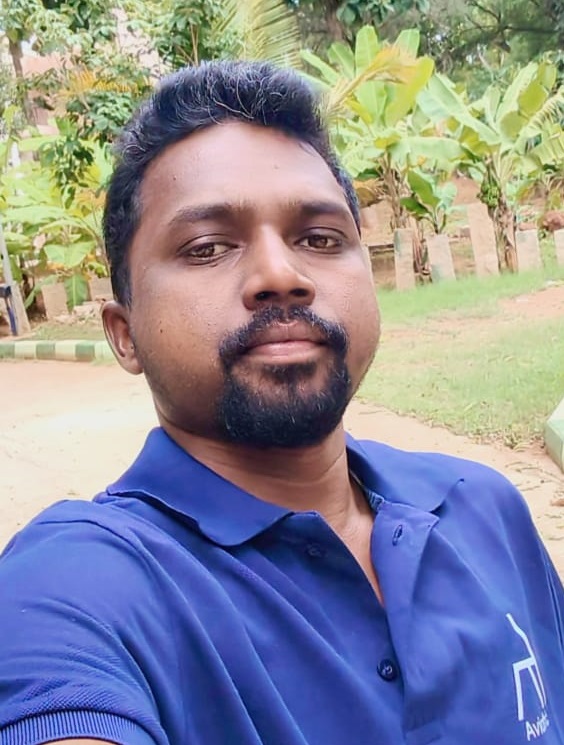
In the quiet rural landscape of Jamtara district in Jharkhand, amid green fields, folk traditions and the rhythms of everyday village life, a young literary voice began to take shape. From Hidaljori village under Bindapathar police station, Dharmenjay Hembram emerged from the soil of a farming family to become a poet, lyricist, translator, singer and an increasingly recognised voice in contemporary Santali literature.
His journey is not simply that of an individual writer. It is the story of how literature rooted in one’s mother tongue can travel from a village to the national stage while carrying with it the memories, struggles, language and cultural identity of an entire community.
Roots in Rural Life
Dharmenjay Hembram grew up in a farming family, surrounded by the simplicity and hardships of village life. The fields, greenery, folk songs, community traditions and everyday experiences of the Santali people became his earliest sources of inspiration.
Economic limitations brought him close to struggle from an early age. But those difficulties also strengthened his connection with his mother tongue and culture.
Rather than viewing writing merely as a form of personal expression, Hembram gradually turned literature into a means of strengthening social and cultural consciousness.
His works reflect different shades of Santali life—nature, love, struggle, cultural identity, social realities and indigenous traditions.
Poetry Rooted in Identity
One of Dharmenjay Hembram’s significant literary works is his Santali poetry collection “Dular Reak Meddak”.
The poems draw upon the emotions, memories, natural surroundings and changing realities of Santali society. Love and nature occupy an important place in his creative world, but his writings extend beyond romantic expression.
At their core lies a persistent question of identity.
His poetry seeks to connect younger generations with their linguistic and cultural roots. It gives literary expression to the experiences of a community negotiating the pressures of social change while attempting to preserve its heritage.
For Hembram, literature becomes both memory and resistance—a way of ensuring that the voices of his people are neither forgotten nor pushed to the margins.
When a Santali Song Reached ‘Mann Ki Baat’
A defining moment in Hembram’s journey came through his Santali Hul-based song “Janga Re Payagan”.
The song gained national attention when Prime Minister Narendra Modi referred to it during his radio programme “Mann Ki Baat.”
For Hembram, this was more than personal recognition.
A song born from the cultural landscape of the Santali community had travelled beyond its geographical boundaries and found mention on one of India’s most prominent national platforms.
The recognition gave Hembram’s work a new visibility and, at the same time, brought wider attention to the Santali language and Adivasi cultural heritage.
It demonstrated how a creative work rooted deeply in a local language and community could still speak to audiences across the country.
Poet, Lyricist and Singer
Dharmenjay Hembram’s creative identity extends beyond poetry.
He is also a lyricist and singer, combining literature with music and oral expression. His songs draw upon the sounds and emotions of Santali society, allowing literary expression to reach people beyond the printed page.
This combination of poetry, song and performance connects his contemporary literary work with the rich oral traditions that have long been integral to Santali cultural life.
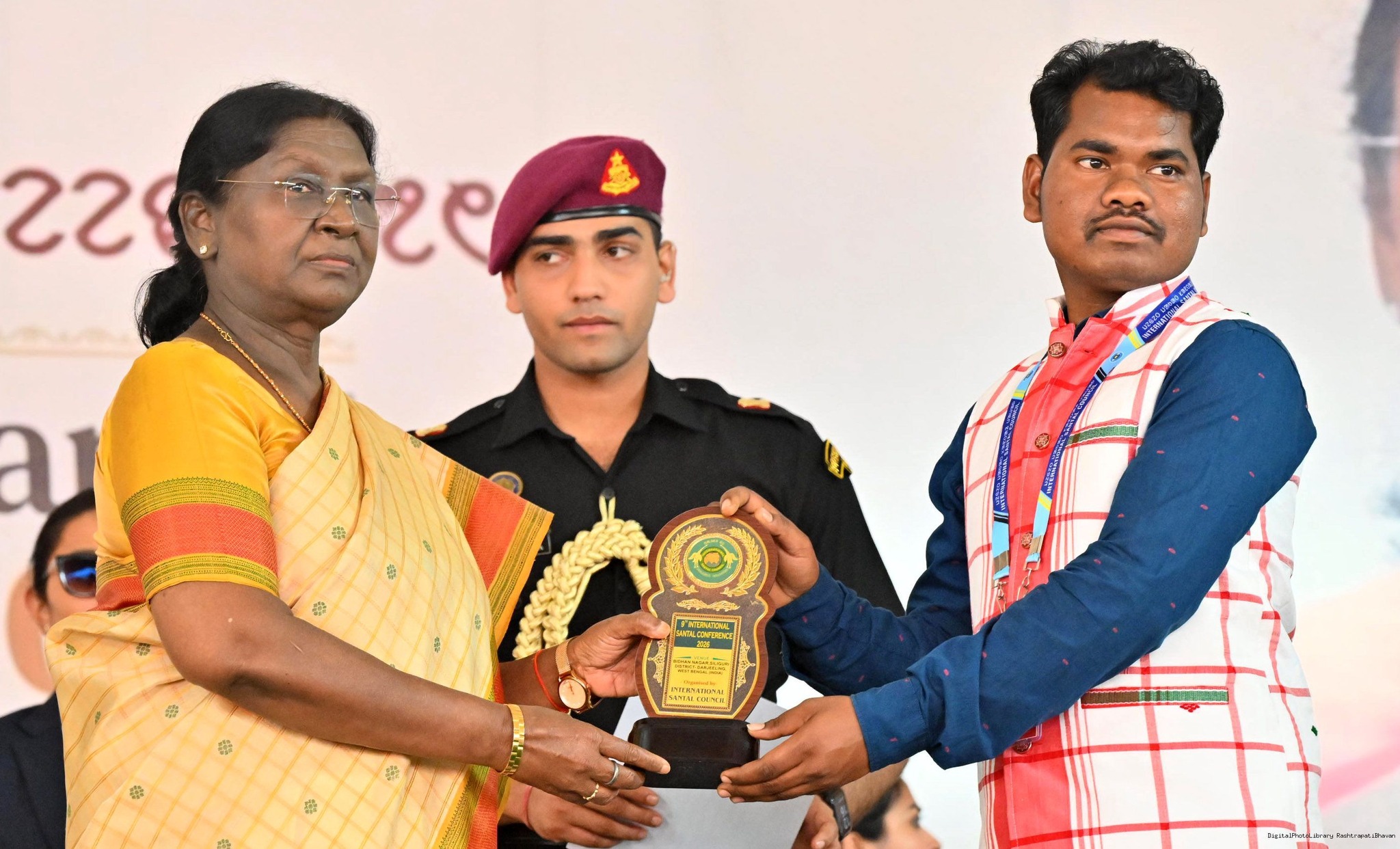
His creative contributions have received recognition at different forums. Reports mention his association with the Hijla Mela Poetry Conference 2024, where he received appreciation for poetry, as well as recognition during a World Adivasi Day celebration in Dumka in 2024.
He was also honoured with the Santal Youth Icon 2025 recognition.
Translation: Building Bridges Between Languages
Another important dimension of Hembram’s literary journey is translation.
He has translated several important Hindi literary works into Santali, creating a bridge between the two languages and expanding access to literature for Santali readers.
Among the works mentioned in reports are Santali translations of Hindi books including “Larhai ar Sanghar” and “Santali Ren Namdak Sawhediya Babulal Murmu ‘Adivasi’”, along with other literary works.
Translation, in his case, is not merely a linguistic exercise. It represents an effort to broaden the literary resources available in Santali and to enable readers to encounter ideas and literature originally produced in other languages through their own mother tongue.
His translation work therefore contributes to both literary exchange and the development of Santali as a language of contemporary reading, writing and intellectual engagement.
Language as the Foundation of Identity
At the centre of Dharmenjay Hembram’s literary philosophy is a strong conviction:
Language is not merely a medium of communication; it is one of the foundations of a community’s identity.
A language carries collective memory, history, worldview, traditions and cultural knowledge. When a language weakens, much more than vocabulary is at risk.
For this reason, Hembram has consistently encouraged younger generations to read, write and create in Santali.
His message is particularly relevant at a time when many indigenous and minority languages face pressures from migration, social transformation and the increasing dominance of larger languages.
Preserving a language, in this understanding, does not mean keeping it confined to the past. It means enabling the language to create literature, songs, translations, research and new knowledge for the future.
Literature Beyond the Printed Page
Hembram’s work demonstrates that contemporary Santali literature can move across several forms.
A poem can become a song.
A song can reach a national audience.
A Hindi literary work can find a new life in Santali through translation.
And the experiences of a small village can become part of a much wider conversation about language, identity and indigenous culture.
This movement between literature, music and translation has helped Hembram establish a creative identity that remains rooted in his community while engaging with the wider literary world.
Working for the Santali Language
Alongside his literary activities, Dharmenjay Hembram has also been associated professionally with language-related work.
According to the published reports, he has been working at the Indian Institute of Languages, Mysuru, in connection with the Linguistic Data Consortium for Indian Languages, contributing to work related to the preservation, documentation and development of the Santali language.
This professional engagement complements his literary journey.
His contribution, therefore, operates on two interconnected levels: as a creative writer producing literature in Santali and as a language worker contributing to its documentation and development.
From Village Soil to National Recognition
The significance of Dharmenjay Hembram’s journey lies precisely in where it began.
He did not have to abandon his linguistic identity to find a larger audience. Instead, it was his connection with his mother tongue, rural experiences and Santali cultural heritage that gave his work its distinctive voice.
From the fields of Jamtara to literary gatherings, from Santali poetry to translation, and from a community song to its mention in “Mann Ki Baat,” his journey illustrates the possibilities available when a writer remains firmly connected to his roots.
His story also challenges the assumption that literature written in an indigenous language must remain confined to a limited geographical space.
A Voice for the Next Generation
Perhaps the most important element of Hembram’s work is his message to young Santali speakers.
A language survives not simply because it has a glorious past, but because a new generation chooses to use it—to speak it, read it, write it, sing in it, translate into it and create new knowledge through it.
Dharmenjay Hembram’s literary journey embodies that principle.
His poems preserve memories.
His songs carry collective emotions.
His translations connect literary worlds.
And his work for Santali language development contributes to building resources for generations yet to come.
From a farming family in a small village of Jamtara to recognition on a national platform, Dharmenjay Hembram’s journey represents something larger than individual literary success.
It is a journey of language, literature, identity and cultural continuity.
His story reminds us that India’s linguistic diversity does not survive only in institutions or official documents. It survives in villages, in songs sung in mother tongues, in poems written by young authors, in translations that connect languages and in communities determined to pass their cultural inheritance to the next generation.
For Dharmenjay Hembram, Santali is more than a language of expression.
It is memory.
It is identity.
It is inheritance.
And through literature, music and translation, he is helping ensure that this inheritance continues to find its voice—from the soil of Jamtara to the wider world.