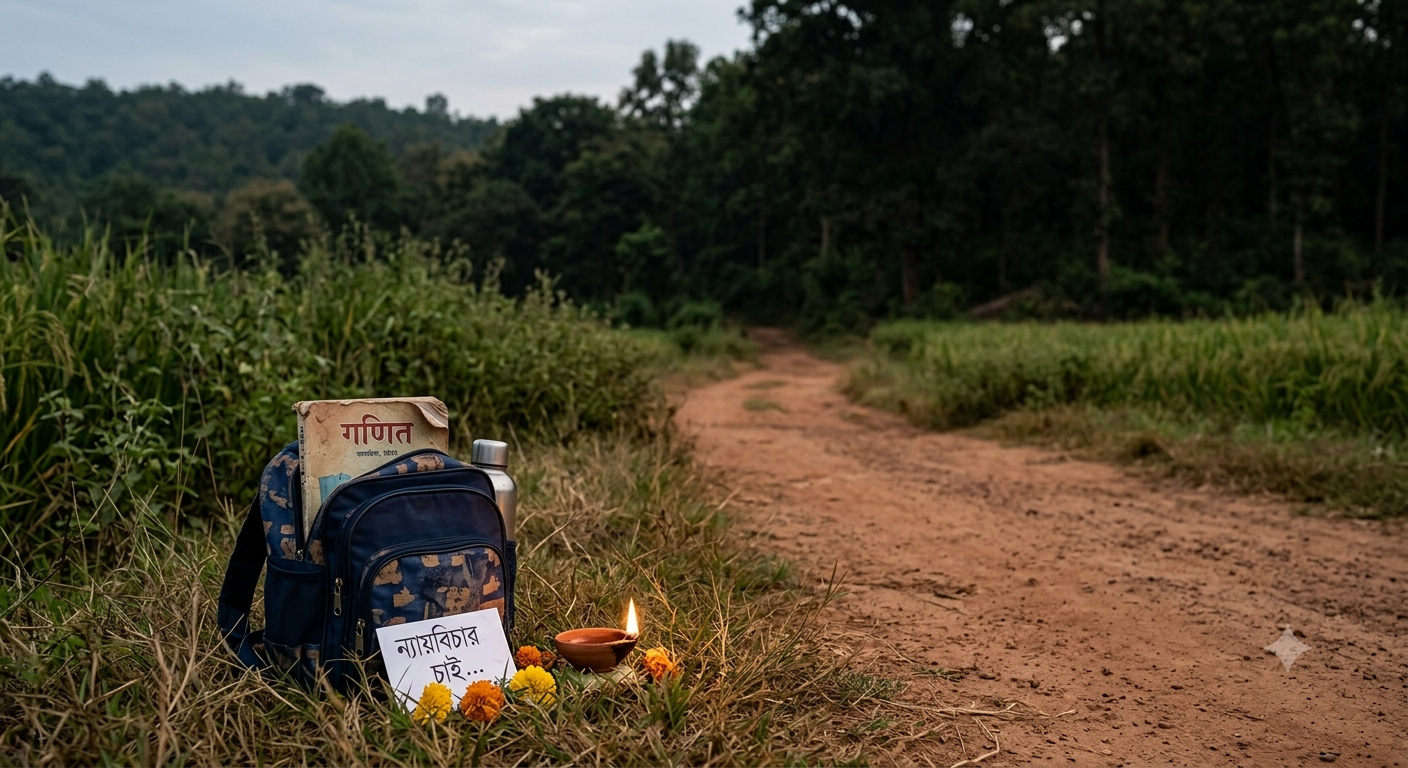

Nearly five-hour agitation brings Keonjhar town to a standstill; traditional leaders submit charter of demands to Collector as protesters question police action, allege political protection and reject claims of missionary involvement.
Keonjhar, Odisha | November 19, 2026
Santal Voices | Special Report
Photo Credit : Basanta Soren (Aadim News) and Ramesh Hansda (Ho Santali News)
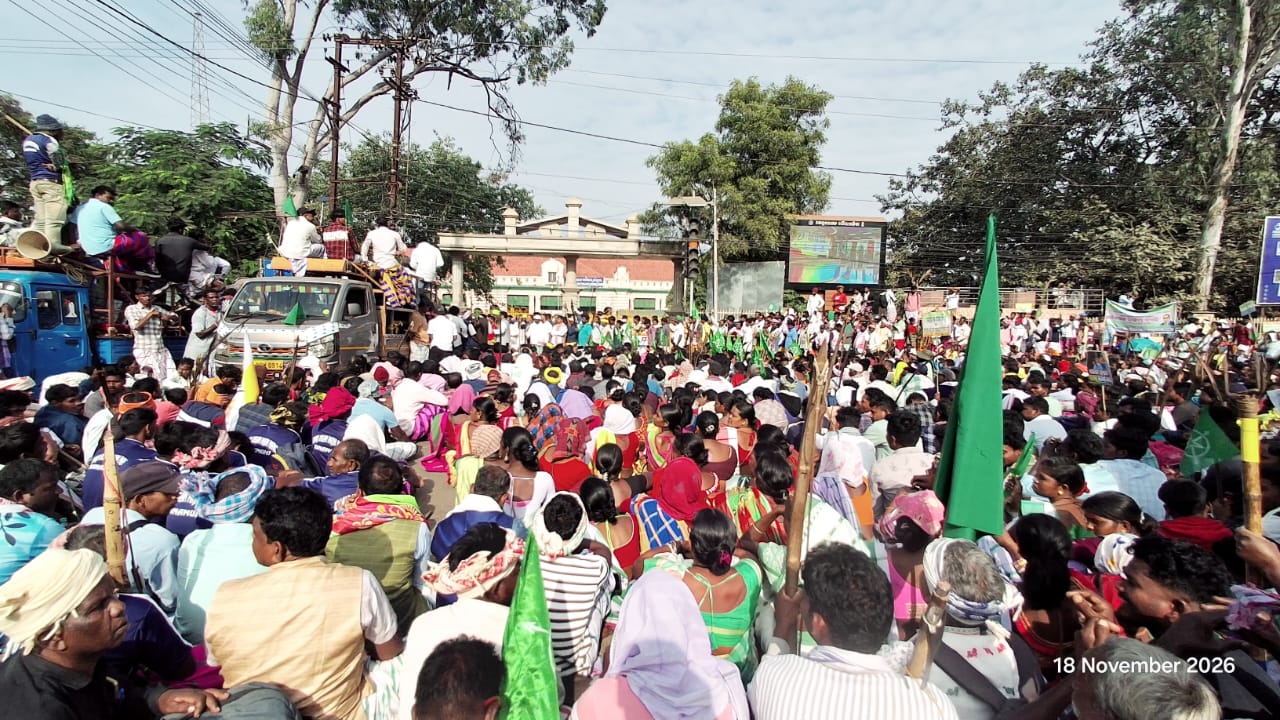
Thousands of Santals and members of other Adivasi communities took to the streets of Keonjhar on November 18, protesting against the alleged attack and desecration of a sacred Jaher Than at Basantpura village under Ghasipura Police Station on October 23, 2026.
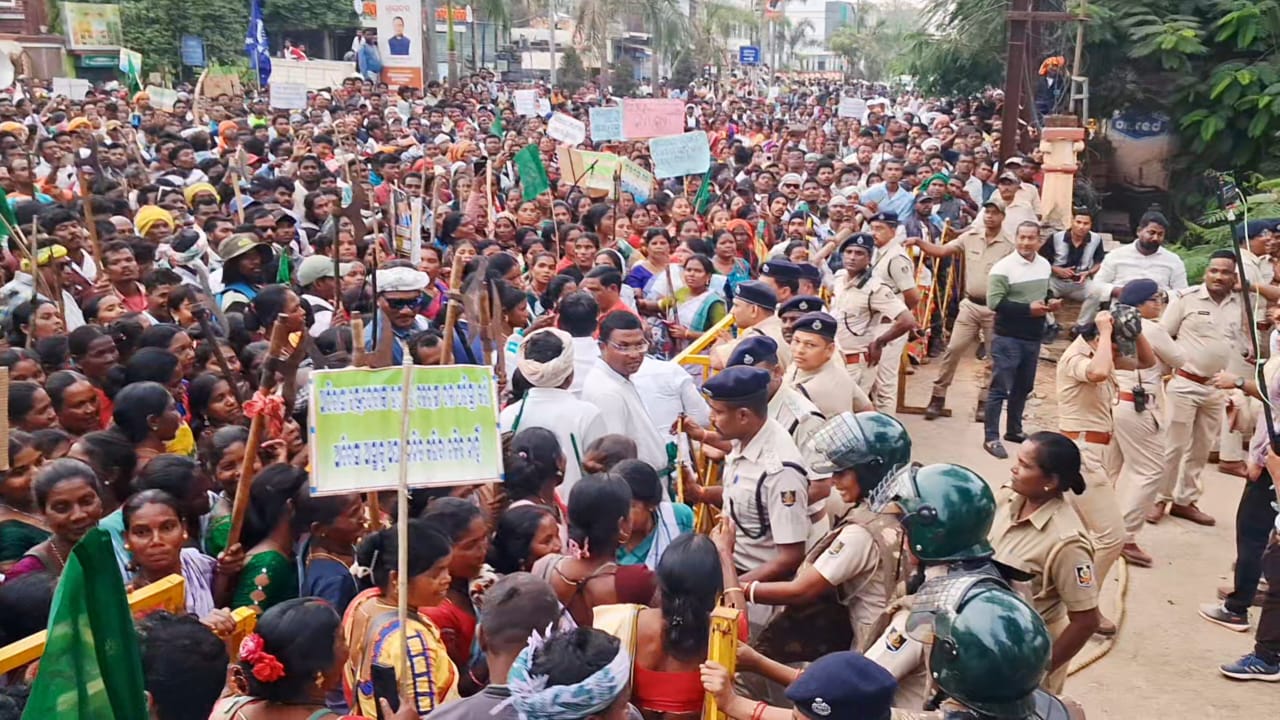
The massive demonstration brought Keonjhar town to a virtual standstill for nearly five hours, disrupting normal activities and vehicular movement as protesters demanded justice, protection of indigenous religious institutions and stringent action against those responsible.
The prolonged agitation reflected growing resentment over alleged interference with ancestral religious practices, physical assaults on community members and what demonstrators described as inadequate action by the police administration.
The controversy has further intensified following allegations of political protection for the accused, demands by the Vishwa Hindu Parishad (VHP) for the release of arrested Bajrang Dal activists, and the circulation of social media narratives attempting to associate the incident with Christian missionaries.
According to complaints lodged by Santal villagers, individuals allegedly associated with Bajrang Dal entered the sacred Jaher Than premises on October 23 while community members were performing traditional religious rituals.
The complainants alleged that the group carried weapons, including swords, iron rods and sticks, disrupted the worship, damaged sacred materials and assaulted members of the community.
Women attending the religious gathering were allegedly subjected to misbehaviour, while elderly persons and young community members were reportedly attacked.
The incident created tension in the surrounding villages and prompted community leaders to approach the police and district administration seeking immediate intervention.
Police initially registered two First Information Reports (FIRs) following complaints from both sides. A third FIR was subsequently registered in connection with the alleged assault on an auto-rickshaw driver who had transported tribal villagers to the police station.
Five individuals associated with Bajrang Dal were arrested on November 10 in connection with the incident. They were identified as Chandan Sethy, Dibyajyoti Puhan, Akshay Kumar Sahoo, Suresh Mallick and Srichandan Puhan.
The arrests followed repeated demands for action by villagers, who had approached Keonjhar Superintendent of Police Nitin Kushalkar.
However, Santal community representatives maintain that several individuals allegedly responsible for leading the attack remain outside police custody.
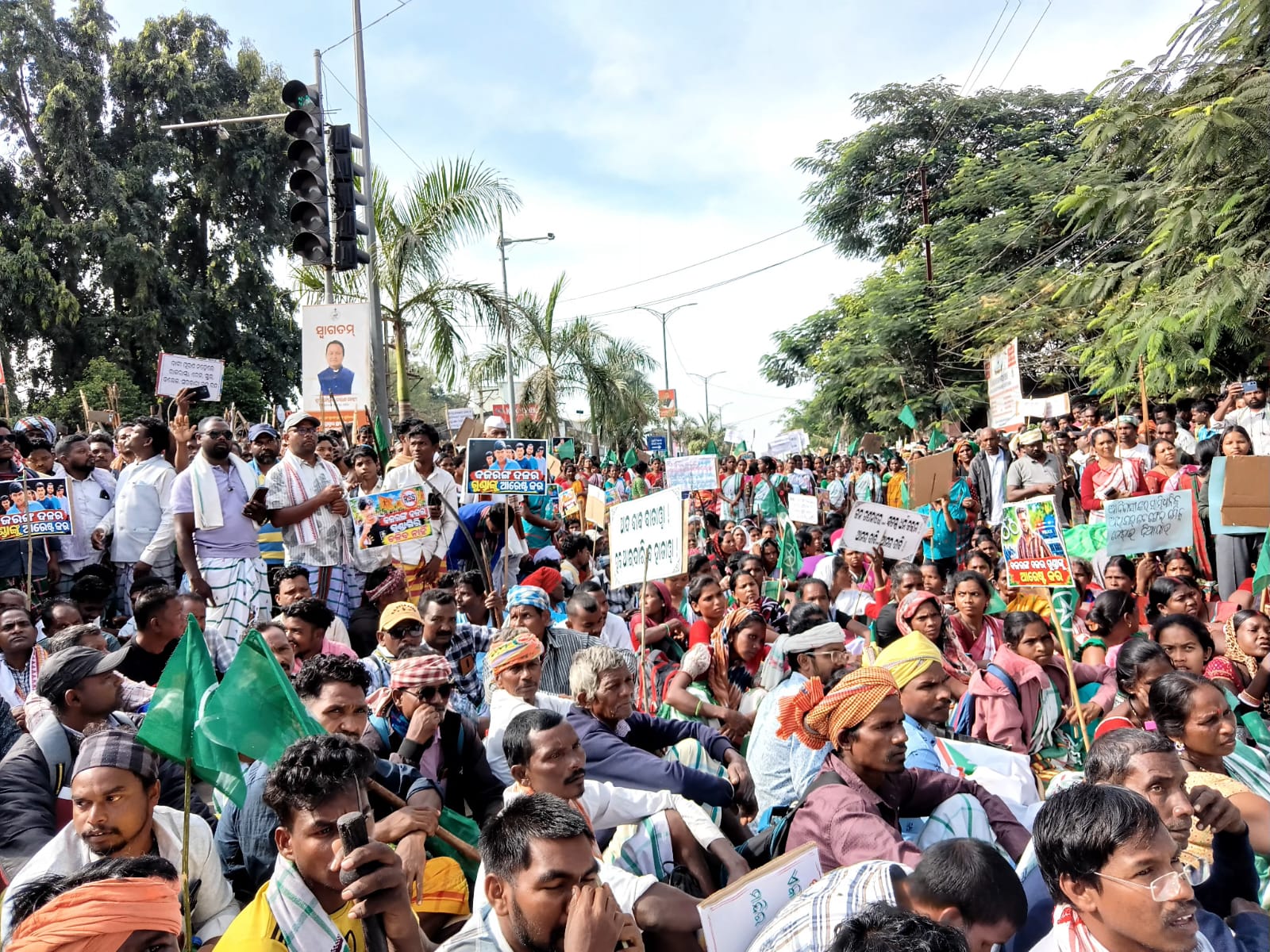
The November 18 demonstration, organised under the leadership of Majhi Pargana Mahal and Milita Adivasi Kalyan Mancha, witnessed participation from traditional community leaders, women, youths and representatives of various indigenous organisations.
Opposition parties, including the Biju Janata Dal (BJD) and the Congress, also extended support to the agitation.
Carrying traditional flags, banners and placards, protesters marched through Keonjhar town, raising slogans demanding justice for the alleged desecration of their ancestral place of worship.
According to information gathered by Santal Voices, the agitation continued for nearly five hours, significantly affecting normal activities and vehicular movement in parts of Keonjhar town.
Protesters alleged that the demonstration was prolonged because of a delay in securing a meeting with the Collector and District Magistrate of Keonjhar.
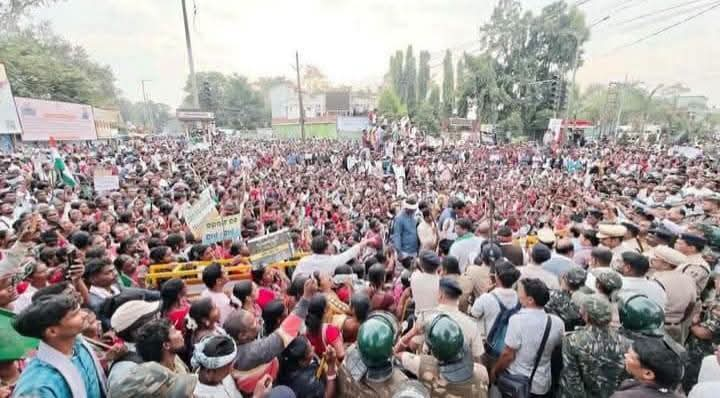
The agitators remained firm in their demand for direct intervention by the district administration and continued their demonstration until their grievances could be placed before the Collector.
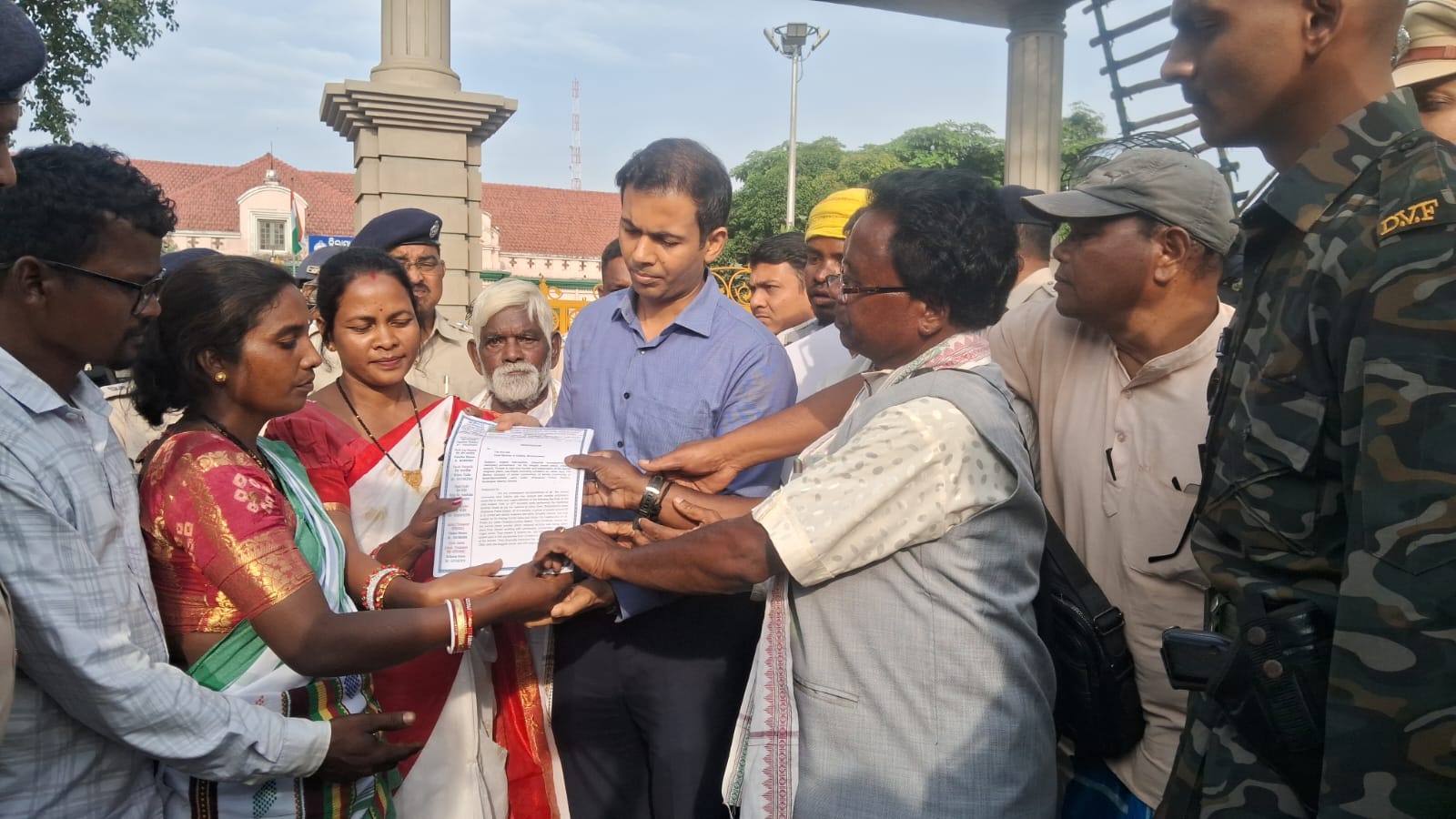
Later in the afternoon, the Collector of Keonjhar met the agitators and traditional community representatives, including Kendujhar District Desh Pargana Jagdish Baskey, Kendujhar District Desh Paranik Nimu Tudu, Basantpura Naike Baba Suresh Tudu, Naike Ayo Sanmati Tudu, All India Ho Language Action Committee representative Ramrai Munduya, and Gond Samaj President Danardhan Naik.
The delegation formally handed over a charter of demands to the Collector, seeking justice for the alleged attack on the sacred Jaher Than, stringent action against all those responsible and adequate protection of indigenous religious institutions.
The representatives also expressed concern over the investigation and called for greater accountability in the handling of the case.
The meeting marked an important development following the prolonged agitation, although the community’s broader demands for accountability and protection remain unresolved.
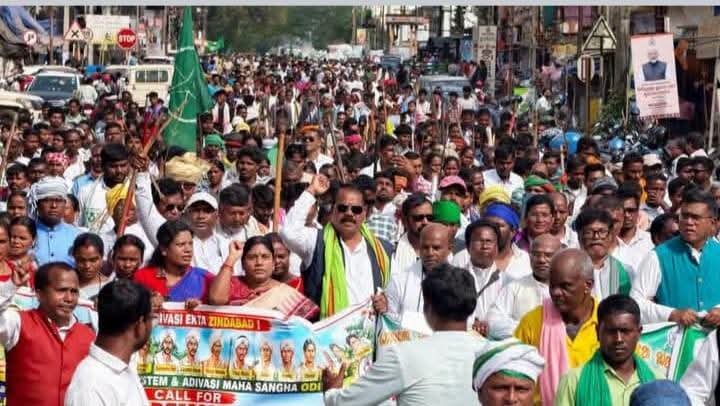
Former Odisha minister and senior BJD leader Sudam Marandi criticised the handling of the incident, alleging that the administration had failed to act promptly and that some of the principal accused had yet to be arrested.
Serious questions have also been raised over the legal provisions invoked by the police administration.
According to a court notice provided to Santal Voices, the matter has been registered as Special Case No. 31/2026, arising out of Ghasipura Police Station Case No. 432/2026, involving Akshaya Kumar Sahoo and four others.
The notice records provisions of the Bharatiya Nyaya Sanhita (BNS), including Sections 191(2), 191(3), 115(2), 296, 74, 351(2), 308(5), 190(1), 298, 300 and 190, along with provisions of the Scheduled Castes and Scheduled Tribes (Prevention of Atrocities) Act.
The notice further records that the five accused had applied for bail and that a hearing was scheduled before the Special Judge, Anandapur, on November 16, 2026. The outcome of that hearing could not be confirmed from the material available for this report.
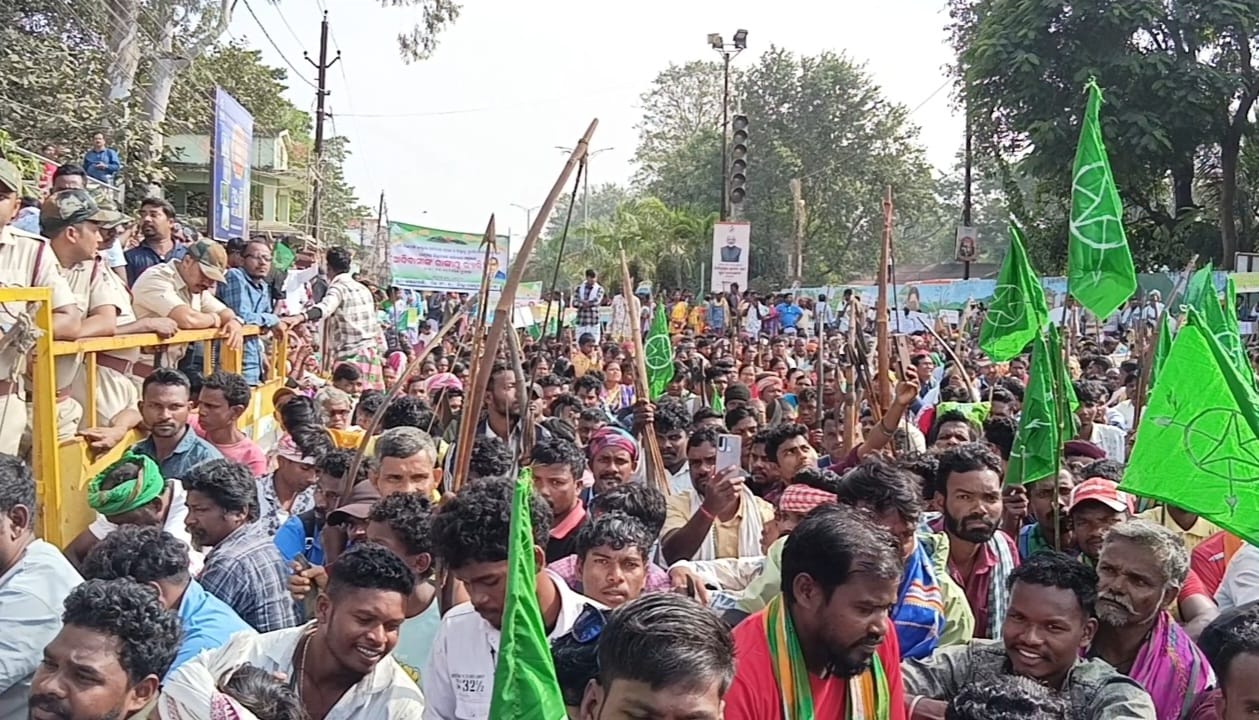
Despite the registration of the case under multiple legal provisions, protesters alleged that the police had failed to invoke sufficiently stringent sections considering the gravity of the reported offences, including desecration of a sacred religious institution, physical assault, intimidation and interference with indigenous religious practices.
Community representatives have demanded a comprehensive review of the investigation and the application of all relevant legal provisions wherever supported by evidence.
The adequacy of the charges, however, requires legal examination and cannot be determined solely from the number of sections invoked.
During the agitation, independent reporter Basanta Soren interacted with several protesters who expressed serious doubts about obtaining justice under the prevailing circumstances.
Some protesters alleged that Bajrang Dal and the Rashtriya Swayamsevak Sangh (RSS), because of their perceived ideological and political proximity to the ruling establishment, could exercise influence affecting the impartiality of the investigation.
They further alleged that certain individuals involved in the incident were receiving indirect support or protection from sections of the government machinery, allowing them to move freely despite complaints lodged by the affected community.
A number of agitators expressed apprehension that the investigation might not reach all those responsible because of the alleged political connections of some accused.
These allegations have not been independently substantiated, and no verified evidence of official interference in the investigation was available to Santal Voices at the time of preparing this report.
Nevertheless, the concerns expressed by protesters reflect their lack of confidence in the administration’s handling of the case.
The controversy has deepened following the intervention of the Vishwa Hindu Parishad (VHP), which has opposed the arrests of the five Bajrang Dal activists.
According to a Press Trust of India (PTI) report, VHP leaders submitted a memorandum to Odisha Chief Minister Shri Mohan Charan Majhi demanding the release of the arrested activists.
The demand has generated further resentment among Santal community members, who question why attention is being directed towards defending those arrested rather than addressing the alleged attack on their sacred religious institution.
Another major concern is the circulation of social media narratives attempting to portray the Jaher Than incident and subsequent Santal mobilisation as a conspiracy planned or instigated by Christian missionaries.
Such narratives have raised apprehensions that the original issue of alleged religious interference and violence against an indigenous community is being overshadowed by an unrelated controversy over missionary activities.
However, local inquiries conducted by the Santal Voices ground reporting team found that the Jaher Than at Basantpura is maintained and managed by the ethnic Santal community itself, following its ancestral religious traditions and customary practices.
According to the ground team’s findings, no evidence was found of missionary involvement in the management, administration or traditional worship activities of the Jaher Than.
These findings challenge claims that the religious site or the community’s mobilisation is controlled by outside forces. No independently verified evidence establishing a missionary conspiracy was identified in the material reviewed for this report.
For the Santal community, Jaher Than is not merely a place of religious gathering. It represents an ancestral sacred institution closely associated with indigenous spiritual beliefs, cultural identity, customary practices and community heritage.
The alleged intrusion into such a sacred institution therefore raises fundamental questions concerning the religious freedom and dignity of indigenous communities.
Community representatives have expressed concern that the repeated circulation of unsubstantiated missionary-related allegations may divert public attention from their original demands for justice, accountability and protection of ancestral religious institutions.
The incident has attracted particular attention because it occurred in Keonjhar, the home district of Odisha Chief Minister Shri Mohan Charan Majhi, who himself belongs to an Adivasi community.
The issue has acquired additional significance because India’s President, Smt. Droupadi Murmu, belongs to the Santal community.
Despite indigenous representation at the highest constitutional and administrative levels, protesters have expressed disappointment over what they describe as the absence of sufficiently prompt and comprehensive action against those responsible for the alleged attack.
Community representatives argue that the arrest of five persons, while an important development, cannot be considered sufficient if other individuals found to be involved remain outside the reach of the law.
They have questioned how the religious institutions of indigenous communities can remain vulnerable to alleged attacks and interference even in the home district of a Chief Minister from an Adivasi background.
The incident has also brought renewed attention to the constitutional protection of religious freedom under Article 25 of the Constitution of India and the legal safeguards available to Scheduled Tribe communities under the Scheduled Castes and Scheduled Tribes (Prevention of Atrocities) Act.
Protesters have demanded the identification and arrest of all persons found responsible, an impartial investigation into the allegations of violence, appropriate legal action, protection of affected families and witnesses, and concrete administrative measures to safeguard traditional Jaher Than sites from future interference.
They have also called upon the state government to ensure that political affiliations, organisational influence or competing religious narratives do not obstruct the administration of justice.
For the Santal community, the incident has become a broader question of whether indigenous people can continue practising their ancestral faith without intimidation, interference or violence.
The nearly five-hour agitation that brought Keonjhar town to a standstill, culminating in the submission of a charter of demands to the District Collector, demonstrated the depth of concern among indigenous communities.
Protesters have made it clear that their demand extends beyond the arrest of a few individuals to accountability for everyone found responsible and lasting protection of their religious institutions.
As the investigation and judicial proceedings continue, the community’s central demand remains unchanged: justice for the alleged attack on the Jaher Than, accountability for every person found responsible and effective protection of indigenous religious institutions.
At the heart of the controversy remains the alleged attack on a sacred Santal Jaher Than and the rights of its worshippers. The community’s demand for justice must be addressed through a fair and transparent investigation, without allowing unsubstantiated allegations, political controversies or competing narratives to obscure the original incident.
Ground reporting: Basanta Soren