
Jharkhand, India | 15 October 2026
The alleged rape and murder of a 14-year-old Adivasi (Indigenous) schoolgirl in the Kathikund area of Dumka district, Jharkhand, has triggered widespread public outrage, student protests and demands for stringent punishment. The incident has renewed concerns over violence against tribal women and girls and the effectiveness of institutional safeguards for vulnerable communities.
According to a report published by The Times of India, police arrested a 35-year-old man in connection with the alleged sexual assault and murder of the Class IX student, whose body was discovered on 9 October 2026 near her village.
The incident has drawn strong condemnation from local residents, students and community activists, who are demanding accountability, an impartial investigation and timely justice for the victim’s family.
A routine afternoon turns into tragedy
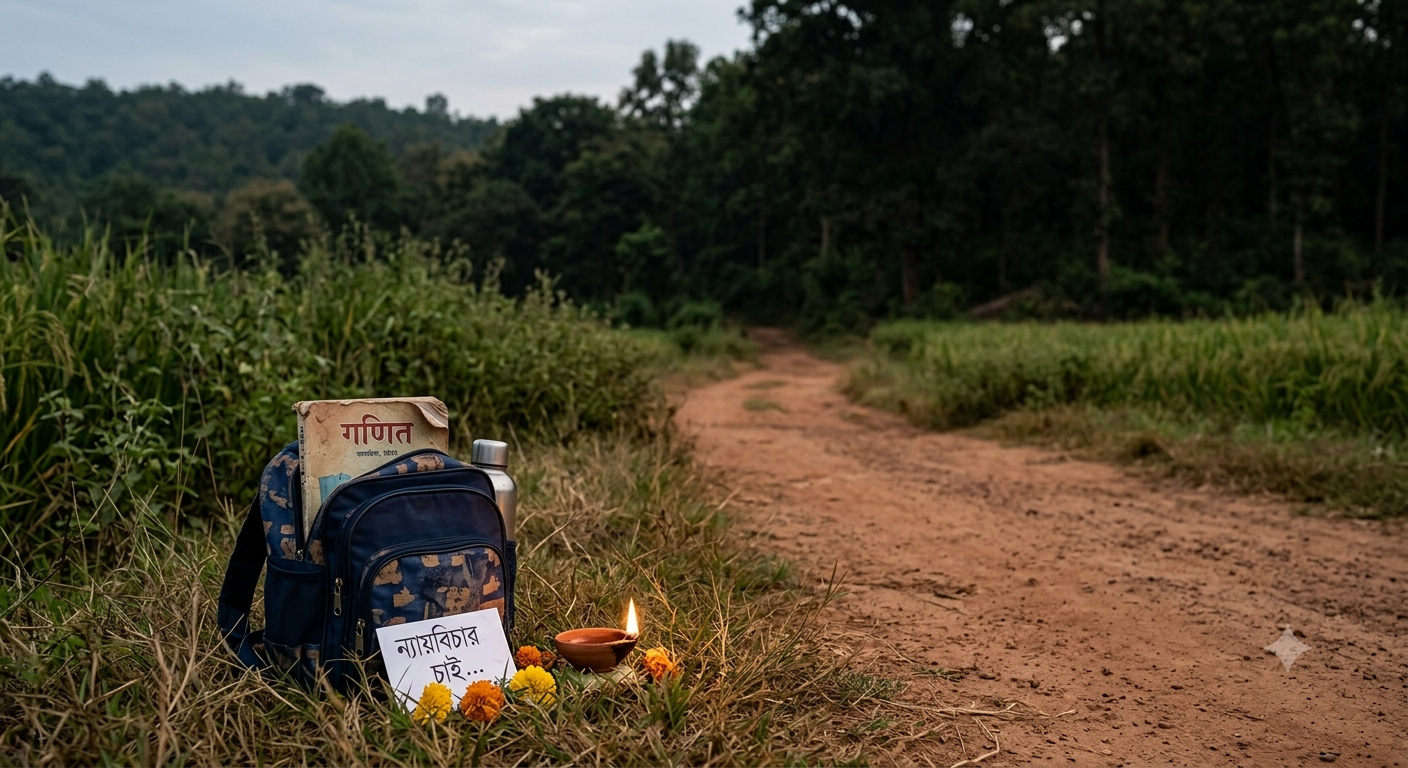
On 9 October, the girl reportedly returned home from school before going to a nearby field to bring back her family’s cattle. When she failed to return, her family members and villagers began searching for her.
According to ThePrint’s initial report, the discovery of the girl’s body prompted police to investigate a suspected sexual assault and murder.
Her body was found in bushes approximately 500 metres from her home. Police subsequently registered a case based on information provided by her parents.
Early reporting, including an account published by Dainik Jagran, raised concerns about possible gang rape. However, subsequent police findings have focused on a single arrested suspect, and the earlier allegations should not be treated as established facts.
The incident shocked the local community and intensified demands for immediate police action.
Police arrest suspect after questioning nearly 500 people
Following the incident, an 11-member Special Investigation Team (SIT) was constituted under the supervision of Dumka Superintendent of Police Pitamber Singh Kherwar.
Investigators questioned nearly 500 people across four surrounding villages and examined forensic material, fingerprints and other evidence.
As The Times of India reported on 13 October, police arrested a 35-year-old man from a neighbouring village in connection with the crime.
According to police, the suspect allegedly assaulted the girl and subsequently strangled her because he feared she would identify him. Investigators said injuries on the suspect’s face, believed to have occurred while the girl attempted to defend herself, provided an important lead.
A subsequent Press Trust of India report carried by ThePrint stated that police had recovered a bloodstained towel and a T-shirt allegedly associated with the incident.
The accused was produced before a local court and remanded to judicial custody. Police have indicated that they intend to pursue a speedy trial and seek stringent punishment.
The allegations against the arrested man remain subject to judicial determination.
Students take to the streets demanding justice
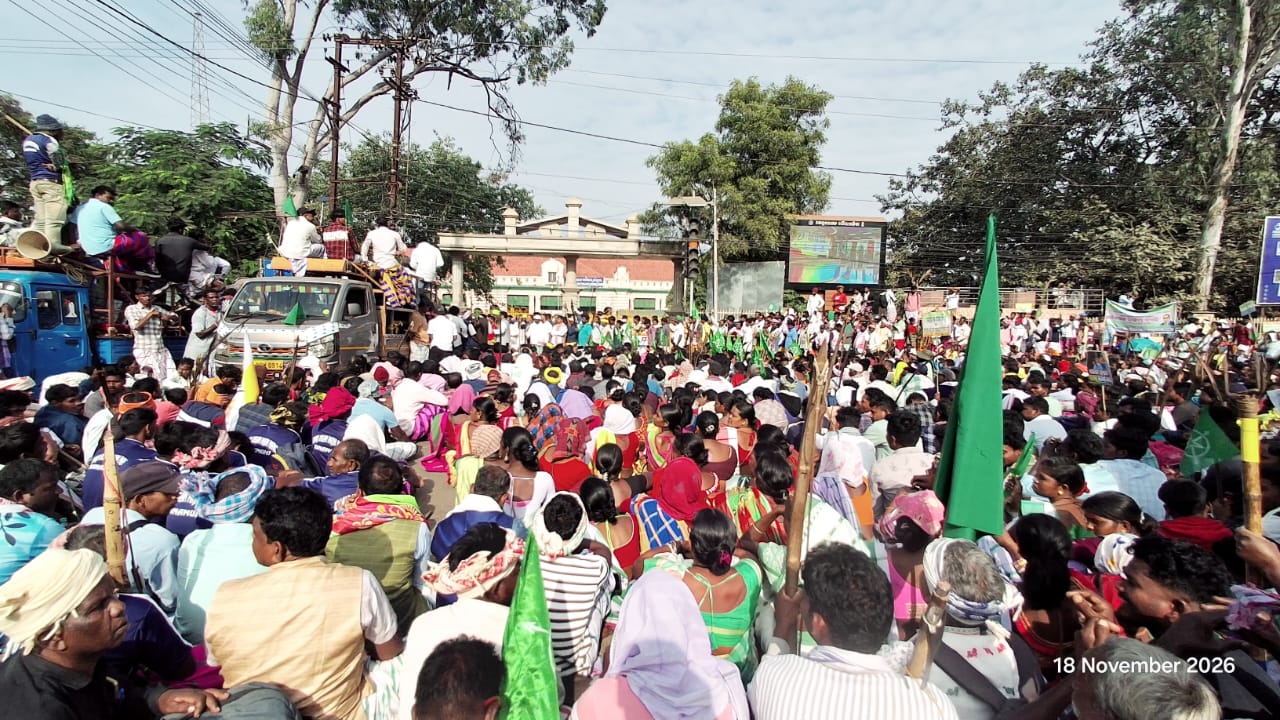
The killing prompted demonstrations in Dumka, with students and local residents expressing anger over the incident.
According to The Times of India’s coverage of the student protests, government school students organised a candlelight march and blocked roads on 12 October, demanding the arrest of those responsible and severe punishment.
Earlier, protesters had also blocked the Dumka–Pakur road, reflecting growing public concern about the safety of children in the region.
The demonstrations highlighted the emotional impact of the crime on the local community and the collective demand for accountability.
Student activist Sushant Tudu calls for constitutional action
Amid the growing outrage, young student activist Sushant Tudu issued a press statement strongly condemning the killing and demanding effective legal action.
Describing the incident as an attack on the dignity and security of tribal women and children, Tudu stressed that administrative assurances alone would not be sufficient.
He called for the application of relevant provisions of the Protection of Children from Sexual Offences (POCSO) Act, 2012, and the Scheduled Castes and Scheduled Tribes (Prevention of Atrocities) Act, 1989, wherever legally applicable.
Referring to Article 21 of the Indian Constitution, which guarantees the right to life and personal liberty, Tudu emphasised that every child has the right to live in dignity and safety.
He also invoked Articles 15(3) and 39, which recognise the state’s role in safeguarding women and children.
Tudu demanded an SIT investigation and an expedited trial, urging authorities to pursue completion of the judicial process within 30 to 60 days, subject to applicable legal procedures.
Although the police have already constituted an SIT and arrested a suspect, his demand for a fair and timely judicial process remains relevant.
He further warned that any unnecessary delay or negligence in securing justice could lead to peaceful democratic protests, citing the constitutional rights to freedom of expression and assembly under Articles 19(1)(a) and 19(1)(b).
His statement reiterated that there could be no compromise over the safety and dignity of women and girls, and that the demand for justice would continue.
Violence against Adivasi women and the challenge of protection
The incident has also raised broader concerns about the protection of Adivasi women and girls in Jharkhand, where Indigenous communities form an important part of the state’s population and cultural identity.
For many tribal communities, the tragedy has become a reminder of the need for stronger child protection mechanisms, accessible policing, gender-sensitive investigations and effective legal assistance.
The safety of girls travelling to school, working in agricultural fields or carrying out everyday household responsibilities remains an important concern in rural communities.
The Kathikund case also illustrates the importance of community participation in reporting crimes, protecting children and ensuring that families receive appropriate institutional support.
At the same time, safeguarding the identity and dignity of victims is essential.
As Dainik Jagran reported following the arrest, Superintendent of Police Kherwar expressed concern over the disclosure of the minor victim’s identity on social media and warned against actions that could cause further distress to her family.
Indian law restricts the disclosure of identifying information about child victims of sexual offences, making responsible reporting particularly important.
Beyond arrest: A continuing demand for justice
While the arrest of a suspect marks an important development in the investigation, it does not conclude the judicial process.
The prosecution must establish the allegations through legally admissible evidence, and the accused is entitled to due process. A fair trial, effective prosecution and appropriate support for the victim’s family will be essential to securing justice.
The killing has brought together students, community activists and concerned citizens in a shared demand for accountability.
For Adivasi communities, the case also raises a larger question: how can institutions ensure that Indigenous women and children are protected from violence and that families affected by serious crimes have meaningful access to justice?
The tragedy in Kathikund is a reminder that protecting vulnerable children requires more than responding after a crime. It demands sustained attention to prevention, community awareness, institutional responsibility and the enforcement of existing legal safeguards.
As the judicial process moves forward, the victim’s family and the wider community await justice.
The public response reflects a broader demand that the safety, dignity and rights of every child, regardless of social or economic background, must be protected.